.png)

.svg)
.svg)
.svg)
Smart Ring vs Fitness Tracker: Accuracy, Features, and Value Compared
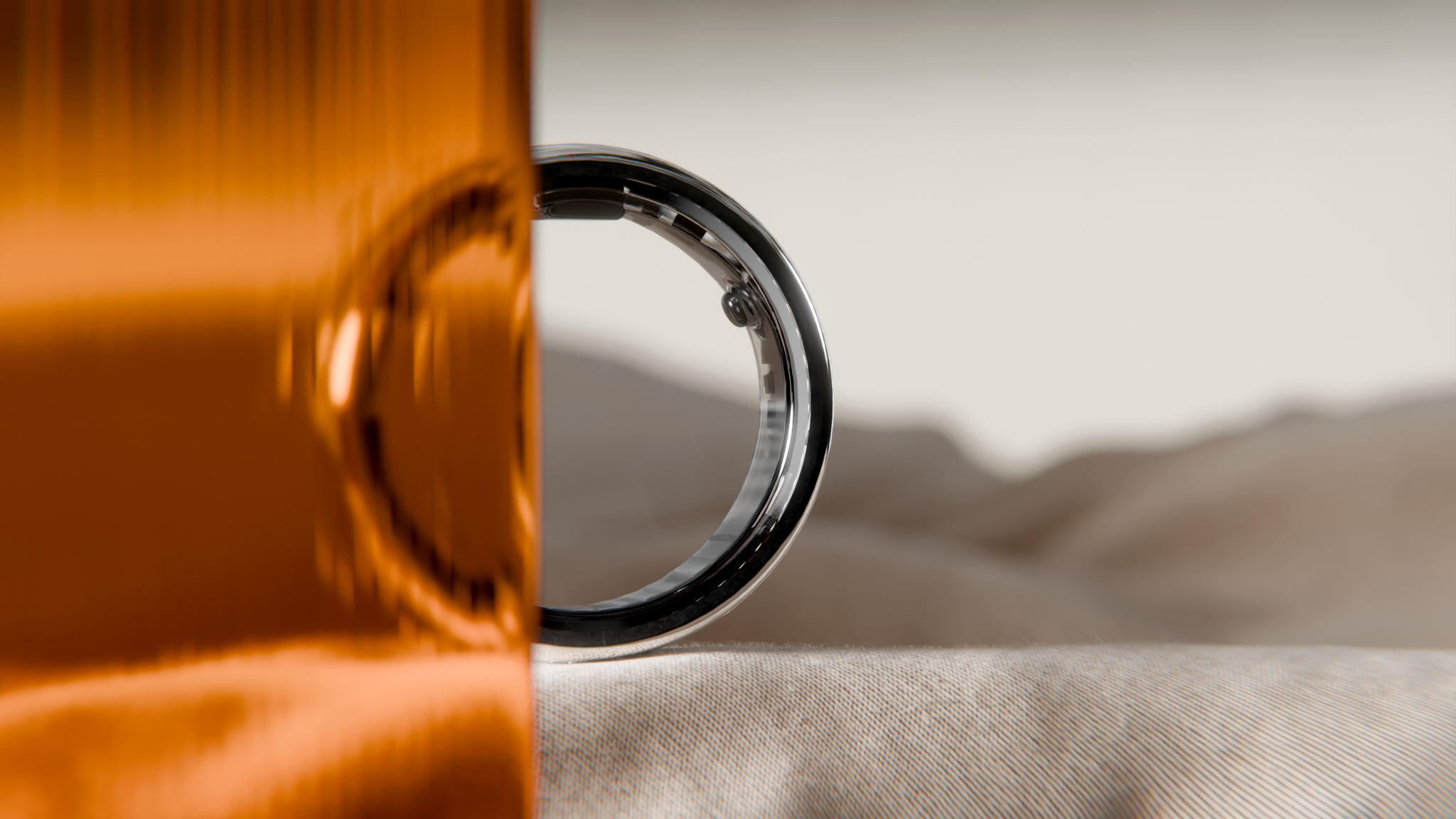
When we built Circular, we faced a fundamental question: can a ring match the accuracy of the best wrist-worn fitness trackers? Most people assume that bigger devices are more accurate. But the physics tells a different story.
When we built Circular, we faced a fundamental question: can a ring match the accuracy of the best wrist-worn fitness trackers? Most people assume that bigger devices are more accurate. A chest strap must be better than a watch. A watch must be better than a ring. But the physics tells a different story.
How Optical Heart Rate Monitoring Works
Both smart rings and fitness trackers use photoplethysmography (PPG): green, infrared or red LEDs that shine light through your skin to measure blood volume changes with each heartbeat. From this single optical signal, algorithms extract heart rate, heart rate variability (HRV), respiratory rate, and even blood oxygen saturation (SpO2).
Here is where the ring has a surprising advantage. Your finger provides a much better site for optical sensing than your wrist. It has denser blood flow, fewer bones and tendons, and less movement during daily activities. A 2023 study published in the Journal of Medical Internet Research compared PPG accuracy at different body sites and found that finger-based sensors consistently outperformed wrist-based sensors, especially during motion and in cold conditions where wrist blood vessels constrict.
Accuracy: Ring vs Tracker
At rest, both smart rings and quality fitness trackers are highly accurate for heart rate monitoring. Studies show correlations above 0.95 with medical-grade ECG at rest for both form factors.
During exercise, the picture shifts. Wrist-based trackers can lose accuracy during high-intensity movements like weightlifting, rowing, or boxing, where wrist flexion and grip tension create motion artifacts that confuse the optical sensor. Finger-based sensors are less affected because your fingers experience far less mechanical stress during exercise than your wrist.
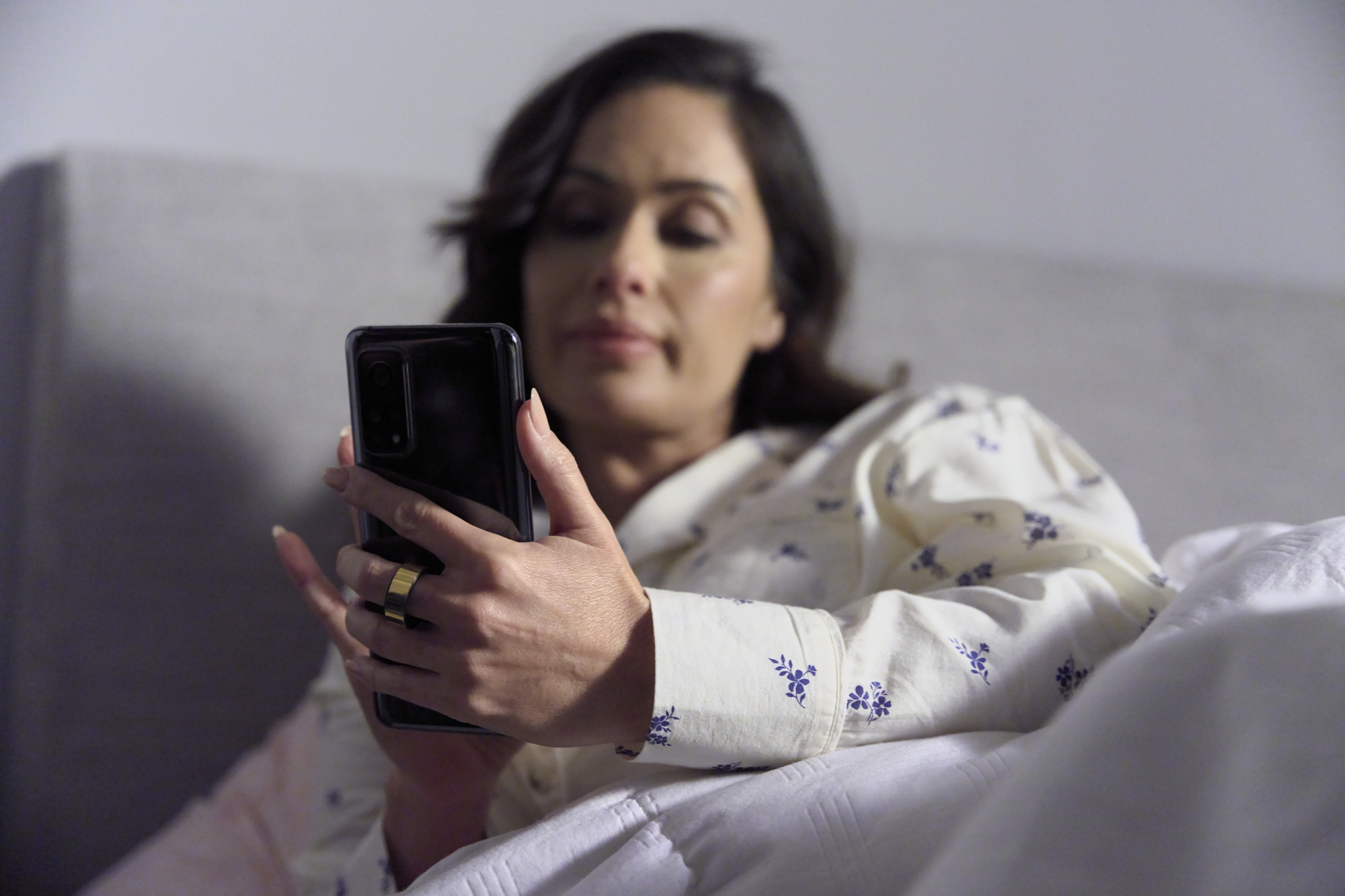
For sleep tracking, rings have a clear advantage. At 4 grams, a ring on your finger is virtually imperceptible during sleep. Many fitness tracker users remove their device at night precisely because a 40-60 gram watch on the wrist is uncomfortable for sleep. A ring stays on, collecting continuous SpO2, HRV, sleep stages, respiratory rate, and body temperature every night.
Comparison: Smart Ring vs Fitness Tracker
Features: What Each Does Best
Fitness trackers excel at real-time data. They have screens. You can glance at your wrist during a run and see your pace, heart rate, and distance instantly. They mirror your phone's features, buzz with notifications, and might have integrated GPS. They are active companions for active moments.
Smart rings take the opposite approach. No screen. No notifications. No buzzing. They are designed to disappear on your finger and collect data passively, 24 hours a day. You check your stats later on your phone.
This makes rings uniquely suited for sleep tracking, recovery monitoring, and long-term trend analysis. They never need to be removed, never buzz during a meeting, and never run out of battery in the middle of the day. A ring is a health companion first, not a second smartphone screen.
Value: The Subscription Problem
This is where the comparison gets interesting. Most premium fitness trackers lock their best features behind a paywall. Detailed sleep analysis, advanced recovery metrics, SpO2 trends, AI coaching, these are premium features that can cost $10 to $30 per month.
Circular has no subscription. You buy the ring, and you own your health data. All features, including heart rate monitoring, HRV, continuous SpO2, sleep stage tracking, respiratory rate, body temperature, ECG, and Kira AI coaching, are included in the purchase price. For life.
Over three years, a popular fitness tracker with a subscription can cost you over $1,000 in total. Circular costs $349, once. That is a fundamental difference in philosophy: health data should not be behind a recurring paywall.
Which Should You Choose?
Choose a fitness tracker if you want real-time data on your wrist during workouts, smartphone notifications, and a screen for quick interactions. It is an active device for active moments.
Choose a smart ring if you want continuous, passive health monitoring that you never have to think about. It is a health companion that collects data 24/7 while you live your life.
Many of our users wear both: a fitness tracker for workouts and a Circular ring for everything else. The ring tracks the recovery, the sleep, the long-term trends. The tracker handles the real-time workout data. Together, they give you the complete picture.
FAQ
Is a smart ring as accurate as a fitness tracker for heart rate?
At rest, yes. During exercise, finger-based PPG sensors can actually be more accurate than wrist-based sensors because the finger has better blood flow and fewer motion artifacts. A 2023 study confirmed finger-based PPG outperforms wrist-based PPG across multiple conditions.
Can a smart ring replace a fitness tracker?
For sleep tracking, recovery monitoring, and 24/7 health data collection, yes, and it does it better. For real-time workout data and notifications, a fitness tracker with a screen is more practical. Many users wear both.
Do I need a subscription for Circular?
No. Circular has no subscription. All 13+ core health features are included in the purchase price.
Which is better for sleep tracking?
A smart ring. At 4 grams, you will not feel it during the night. Many fitness tracker users remove their device at night precisely because of comfort. Circular tracks sleep stages, HRV, continuous SpO2, respiratory rate, and body temperature, every night.
How long does the battery last?
Circular lasts up to 6 days on a single charge, with fast charging that brings it to full in 30 minutes.
Take the Quiz: See Where You Stand
References
- Journal of Medical Internet Research (2023): PPG sensor accuracy by body site
- https://www.circular.xyz/products/circular-ring