%201-1.avif)
How Circular Invented the Silent Vibration Smart Alarm in 2021
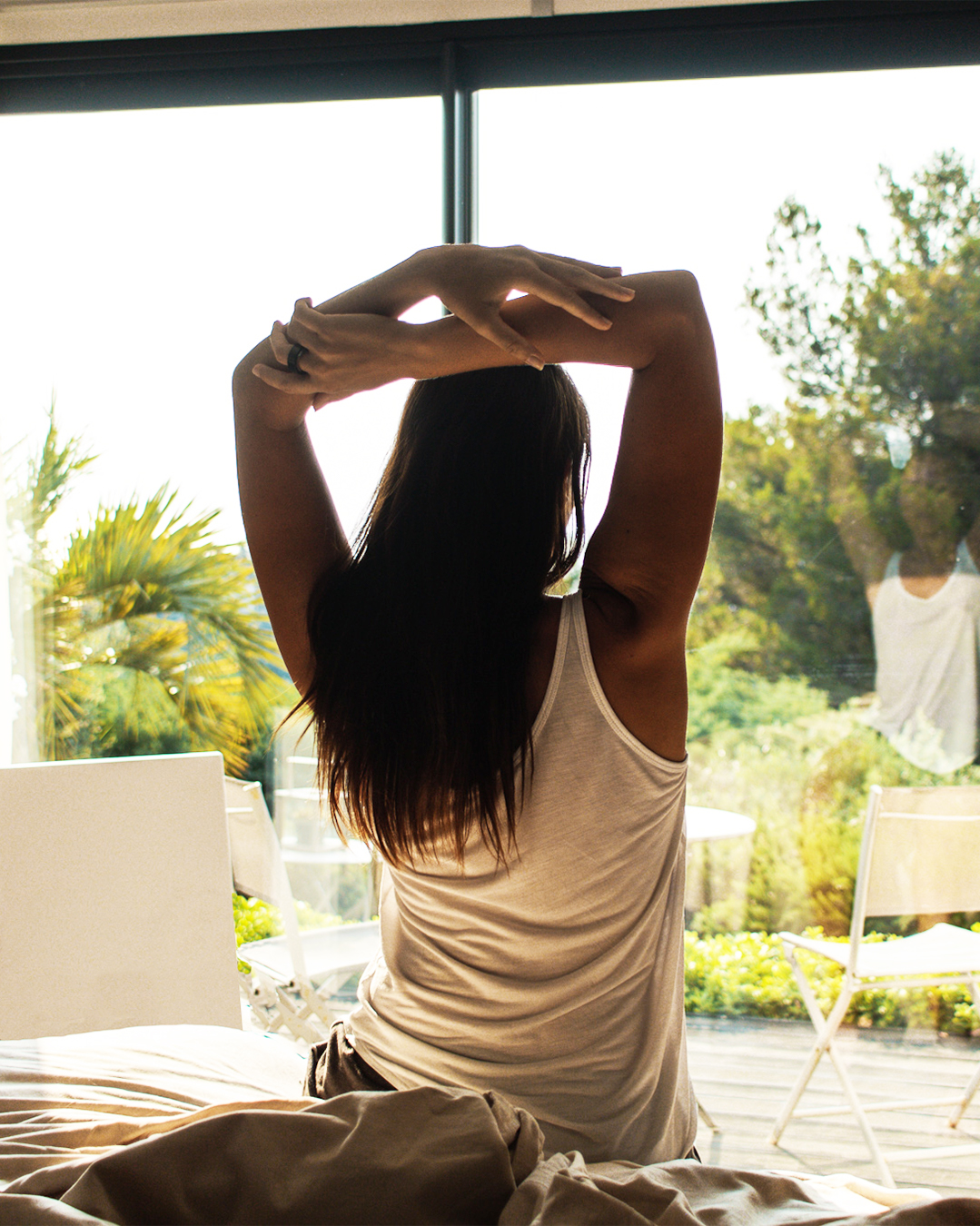
If you are like most people, your morning starts with a loud, jarring noise that yanks you out of sleep regardless of whether your body is ready to wake up. You hit snooze. You feel groggy. You stumble through the first hour of your day in what scientists call sleep inertia: that foggy, disoriented state that can last anywhere from 15 minutes to over an hour.
Back in 2021, Circular set out to solve this problem in a way nobody had before. We designed a smart alarm system integrated into a smart ring and built an algorithm that wakes you during your lightest sleep phase instead of jolting you out of deep sleep. Looking back, it was one of the smartest design decisions we ever made. Here is the story behind it and the science of why it works.
The Problem with Traditional Alarms
A standard alarm clock does not care what sleep stage you are in. It goes off at the time you set, full stop. If that happens to be during deep sleep (stage N3) or REM sleep, you are in trouble.
Deep sleep is when your body performs physical repair: tissue growth, muscle recovery, immune system strengthening. REM sleep is when your brain consolidates memories, processes emotions, and regulates mood. Being forcefully woken from either stage triggers a stress response: your heart rate spikes, cortisol floods your system, and you enter wakefulness in a state of physiological shock.
Research published in the Journal of Sleep Research shows that waking from deep sleep produces significantly worse cognitive performance for up to two hours compared to waking from light sleep. Reaction time slows, decision-making degrades, and mood takes a measurable hit. Multiply that by 365 mornings a year, and the cumulative effect on your wellbeing is substantial.
The Silent Alarm is also ideal if you sleep with a partner who wakes up at a different time. A traditional alarm clock forces both of you to wake up simultaneously. The Circular smart alarm delivers a personalized wake-up window through your phone, letting your partner sleep undisturbed until their own optimal moment. No more negotiating alarm times; no more waking each other up at the wrong sleep stage.
How Circular Reinvented the Wake-Up
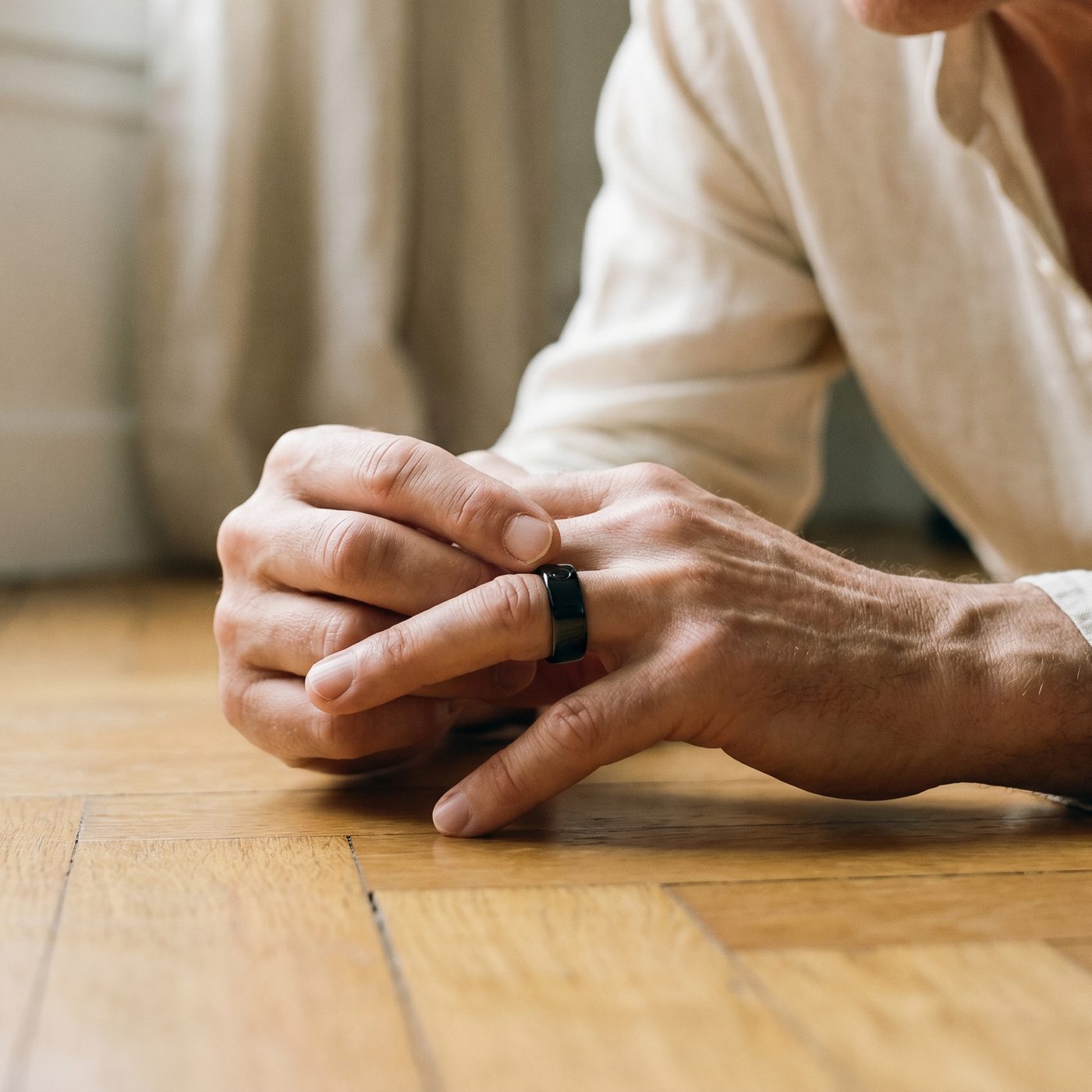
When we designed the Circular Ring 1 in 2021, we asked a simple question: what if your alarm knew when you were ready to wake up, and woke only you, not your partner? The answer was a combination of three innovations:
First: a sleep-staging algorithm accurate enough to detect light sleep phases from a ring that weighs just a few grams. This was no small engineering challenge. The algorithm had to be accurate enough to detect light sleep from a ring sensor but efficient enough not to drain the battery using photoplethysmography (PPG) sensors that monitor heart rate, heart rate variability, and movement throughout the night. These signals feed into an algorithm that classifies your sleep into light, deep, and REM stages in real time.
Second: a smart window system with live vibration. You set a target wake-up time (say, 7:00 AM) and a window (say, 30 minutes). Between 6:30 and 7:00, the algorithm watches for your next period of light sleep. When it detects one, your ring vibrates at the optimal moment. You wake naturally, during the phase your body was already transitioning toward wakefulness.
Why a Smart Alarm Based on Sleep Cycles Works Better Than a Fixed Alarm
The human fingertip has one of the highest densities of mechanoreceptors in the body: specialized nerve endings that detect pressure and vibration. There are roughly 2,500 touch receptors per square centimeter of fingertip skin. A gentle vibration is immediately registered by your somatosensory cortex without needing to be loud or jarring.
Sound alarms have two problems. First, they are indiscriminate: everyone in the room wakes up, including your partner, your child, or your pet. If your partner wakes up at a different time than you, this is not just annoying: it disrupts their sleep cycle too, leaving both of you groggy. A 2019 survey by the Better Sleep Council found that partner disturbance from alarms is one of the top three sleep complaints among couples. Second, sound alarms trigger a startle reflex: an evolutionary fight-or-flight response that spikes adrenaline. That is the opposite of how you want to start your day.
The Circular smart alarm solves both problems. Only you hear your phone alarm. Your partner stays asleep. And because the alarm is timed to light sleep, there is no startle response.
The Science of Sleep Inertia and Why Timing Matters
Sleep inertia is the period of impaired performance and grogginess immediately after waking. A 2020 meta-analysis in Sleep Medicine Reviews examined 68 studies and concluded that sleep inertia is worst when waking from deep sleep (N3), moderate when waking from REM, and mildest when waking from light sleep (N1/N2).
This is the scientific basis for Circular's smart window approach. By targeting the light sleep phase, the algorithm minimizes your sleep inertia. You wake up feeling more refreshed, more alert, and more ready to start your day. Users consistently report that mornings feel easier and that they no longer need the snooze button.
The Evolution from Circular Ring 1
The smart alarm was first introduced on the original Circular Ring 1 in 2021. With Circular Ring 2, we refined the algorithm with more sensor data, better sleep stage classification. The alarm is delivered through your smartphone with sound. The ring detects your optimal wake-up stage and triggers the phone alarm at the right moment. The core principle remains the same: wake you gently from light sleep, never from deep sleep.
Today, the smart alarm is one of our most loved features ever. It is the kind of thing that sounds small on paper, but once you experience waking up without a blaring alarm, you never want to go back.
Part of 13+ Core Features, No Subscription
The smart alarm is included with Circular Ring as one of the 13+ core health features. No subscription, no in-app purchase, no premium tier. Just a better way to wake up.
WARNING: The smart alarm is performed from the smartphone with sound. The Circular Ring does not have a vibration motor: it analyzes your sleep stage and wakes you at the right time via your phone's alarm.
Frequently Asked Questions
How does the smart alarm know when I am in light sleep?
Circular Ring uses PPG sensors to track heart rate, heart rate variability, and movement. These signals feed into a sleep-staging algorithm that classifies your sleep into light, deep, and REM phases in real time. The alarm targets the light sleep phase within your chosen window.
Can I set a hard deadline even if I am in deep sleep?
Yes. If no light sleep is detected within your chosen window, your phone alarm will sound at your final target time as a safety net. You will never oversleep because of the smart alarm.
Is the smart alarm reliable at waking me?
Yes. The smart alarm uses your phone's speaker to wake you at the optimal moment in your sleep cycle. Most users find it effective, and you can adjust the alarm sound and volume in the Circular app.
Will the smart alarm wake my partner?
The smart alarm is performed from your smartphone. If you sleep with a partner who wakes at a different time, you each get your own optimal wake-up window , your alarms are independent. Also great if you sleep with a partner who doesn't wake up at the same time , you each get your own optimal wake-up window.
What is the ideal smart alarm window to set?
A 30-minute window works well for most people. It gives the algorithm enough time to find a light sleep phase without requiring you to go to bed significantly earlier than you would otherwise.
Does the smart alarm work if I sleep on my hand?
Yes. The ring's sensors continue tracking your sleep stages regardless of hand position. The alarm sounds from your phone, so it works in any sleep position. The ring is designed to be worn comfortably in any sleep position.
Ready to experience it yourself?
ECG, sleep tracking, 140+ biomarkers analyzed daily by Kira AI. No subscription, ever.
Take the Quiz: See Where You Stand
References
1. Hilditch CJ, McHill AW. "Sleep inertia: current insights." Nature and Science of Sleep, 2019. https://www.ncbi.nlm.nih.gov/pmc/articles/PMC6710480/
2. Tassi P, Muzet A. "Sleep inertia." Sleep Medicine Reviews, 2000. https://www.sciencedirect.com/science/article/abs/pii/S1087079200900988
3. Jewett ME et al. "Time course of sleep inertia dissipation in human performance and alertness." Journal of Sleep Research, 1999. https://onlinelibrary.wiley.com/doi/abs/10.1046/j.1365-2869.1999.00128.x
4. Vallat R et al. "Sleep inertia measurement and countermeasures: a meta-analysis." Sleep Medicine Reviews, 2020. https://www.sciencedirect.com/science/article/abs/pii/S1087079220300927
5. Johansson RS, Vallbo AB. "Tactile sensibility in the human hand." Journal of Physiology, 1979. https://www.ncbi.nlm.nih.gov/pmc/articles/PMC1281448/