%201-1.avif)
Introducing Kira: The World First AI Health Coach in a Smart Ring
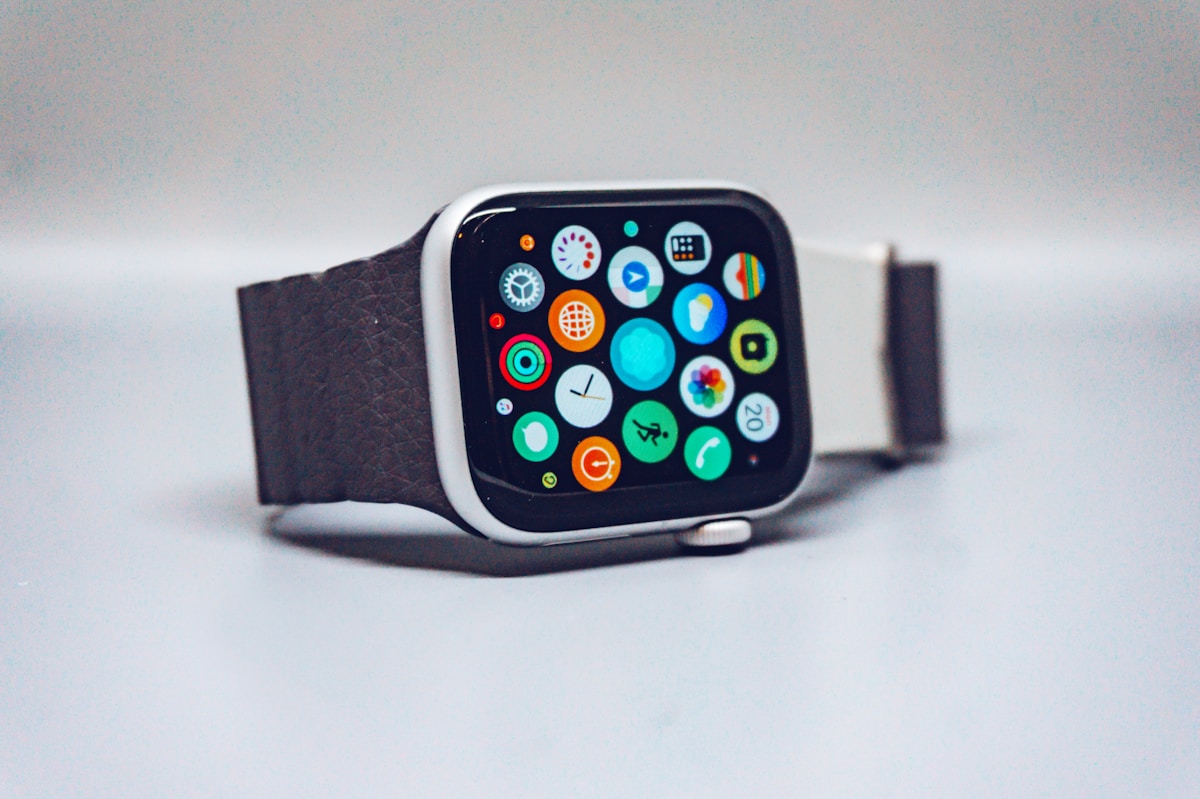
Most wearables are great at collecting data. They fill your phone with charts, graphs, scores, and numbers: HRV is 78ms, SpO2 is 92%, recovery 42 percent. But then they stop. They hand you the data and leave you to figure out what to do with it. That is like a mechanic handing you a list of engine fault codes without telling you what needs fixing.
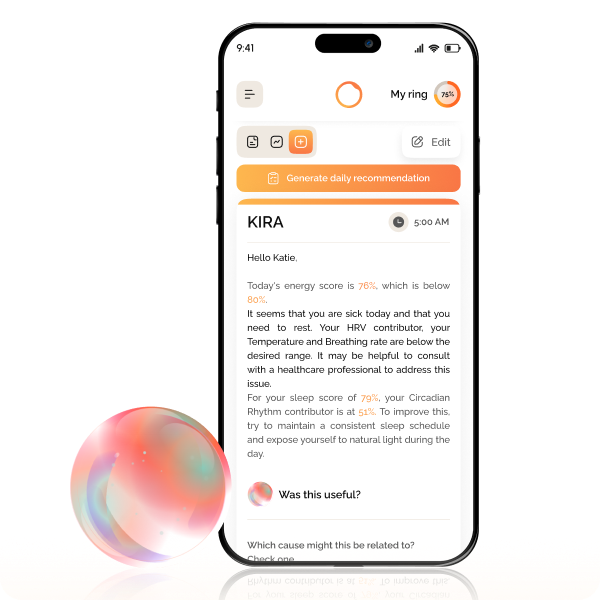
When we first built Kira for the Circular Ring, we wanted to solve exactly that problem. Kira is not a dashboard; it is a coach. It reads your biometrics, understands your patterns, and tells you what to do in plain, human language. Today, with Circular Ring and over 140 biomarkers to analyze, it is smarter than ever. Here is how it works and why it represents a fundamental shift in how we interact with our health data.
What is Kira?

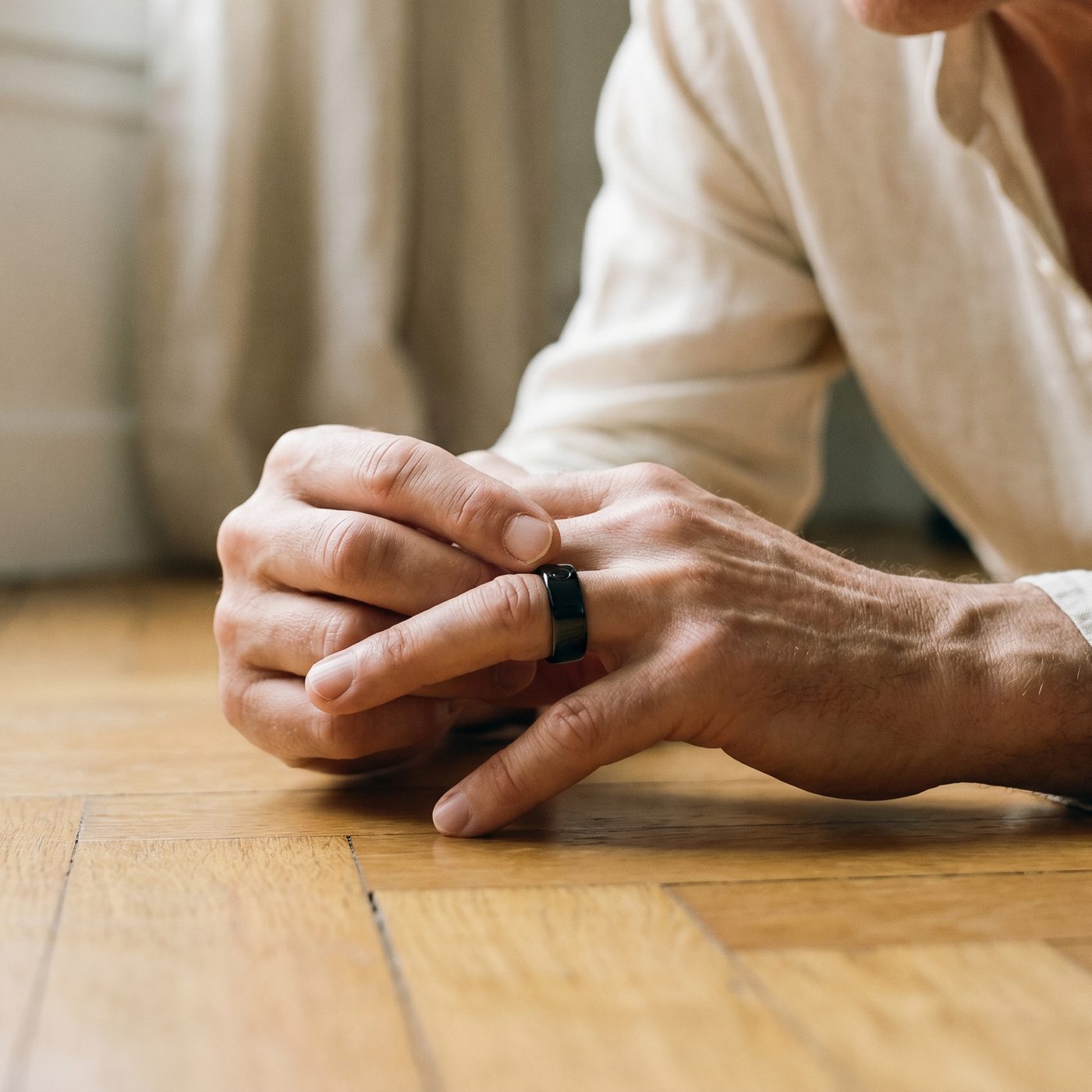
Kira is the AI health coach built into every Circular ring, starting with the original Circular Ring 1 and now at its most advanced on Circular Ring. Its job is simple to describe but complex to execute: translate raw biometric data into actionable, personalized coaching.
Think of Kira as a combination of a sports scientist, a sleep researcher, and a wellness advisor, all running continuously in the background of your life. It knows your sleep architecture, your heart rate patterns, your body temperature trends, your activity load, your stress levels, and your recovery state. And unlike a human coach, it is with you 24/7.
How Kira Works: From 140+ Biomarkers to One Clear Insight
Circular Ring gathers more than 140 daily biomarkers using its suite of sensors: PPG for heart rate and SpO2, ECG electrodes for heart rhythm, temperature sensors, accelerometers for movement, translated into sleep, activity, stress and more. That is a firehose of data. The challenge is turning it into something useful.
Kira processes this data through multiple analysis layers:
Sleep architecture analysis: Kira tracks your time in light, deep, and REM sleep, your sleep latency (how long it takes you to fall asleep), and your sleep efficiency. It correlates these with your heart rate, HRV, body temperature, and SpO2 trends throughout the night.
Cardiovascular profiling: Your resting heart rate, HRV, ECG readings (on Circular Ring), and heart rate response to activity are combined into a cardiovascular fitness picture. Kira tracks deviations from your baseline and flags patterns worth attention.
Recovery assessment: By analyzing HRV trends, sleep quality, and resting heart rate, Kira estimates your recovery state. It knows when you are overtrained, when you are well rested, and when stress is impacting your physiology.
Activity and energy expenditure: Across 50+ sport modes, Kira tracks your activity intensity, duration, and caloric burn, then integrates that with your recovery data to recommend training loads.
The output is not a wall of numbers. It is a single, clear insight delivered when you need it. For example: "Your HRV dropped 15% last night and your resting heart rate is elevated. You might be fighting something. Consider an early bedtime tonight and skip the high-intensity workout you had planned."
Proactive Coaching, Not Passive Tracking
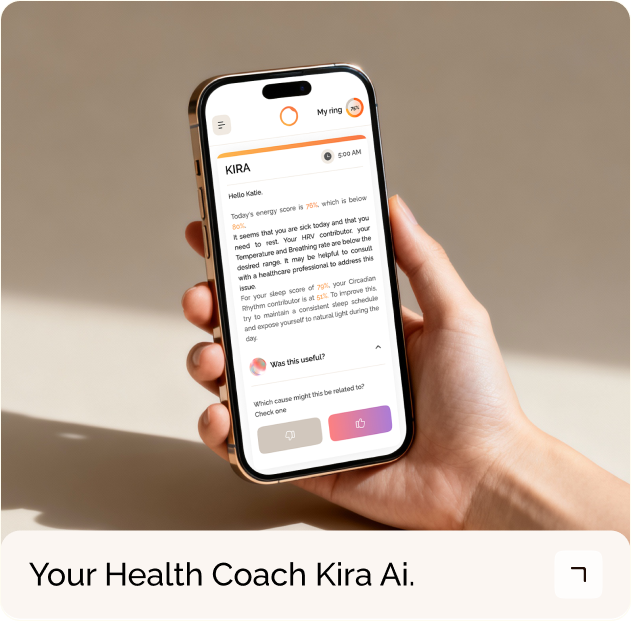
One of the biggest differences between Kira and other health platforms is that Kira does not wait for you to talk to it. It proactively analyzes the 140+ biosignals and delivers insights to you at the press of a single button when something matters:
Irregular heart rhythm detected: If your ECG shows signs of atrial fibrillation during an on-demand reading, Kira alerts you with a classification and recommends discussing it with your doctor.
Sleep quality declining: If your sleep efficiency trends downward for several nights, Kira surfaces the pattern and suggests adjustments: earlier bedtime, reduced evening screen time, or lower room temperature.
Recovery insufficient: If your HRV is suppressed and your resting heart rate is elevated after a hard training block, Kira recommends an active recovery day instead of another intense session.
Body temperature shift: Subtle changes in your nocturnal body temperature can signal the onset of illness, hormonal fluctuations, or overtraining. Kira correlates this with your other metrics to provide context.
The key word here is "proactive." You do not need to remember to check your stats. Kira analyzes what's happening in your body and mind, and tells you what to do today to be better tomorrow.
Privacy by Design
I want to be clear about how Kira handles your data, because health data is the most personal data there is. Kira performs its analysis on secured HIPAA and GDPR-compliant servers built for medical data. Your data is anonymized and segmented. It is yours. Circular does not sell health data to third parties, and Kira's features do not require a subscription.
Your health insights are yours. Kira works for you, not for an advertising algorithm.
The Evolution: From Circular Ring 1 to Circular Ring
Kira was first introduced with the original Circular Ring 1. That early version analyzed sleep, activity, and heart rate data to provide basic coaching recommendations. With new models, Kira gained access to ECG data and significantly improved sensor accuracy. The coaching models were retrained on a much larger dataset, and the insights became more specific, more personalized, and more actionable.
The upcoming Kira AI upgrades (sport coaching, women's health insights) will make it even more capable. But the philosophy remains the same: your ring collects the data; Kira tells you what it means.
No Subscription Required
Kira's core coaching features are included with Circular Ring as part of the 13+ core health features. No monthly fee. No paywall. Your data, your coach, your insights.
Frequently Asked Questions
What is the difference between Kira and other health apps?
Most health apps display data: charts, scores, and numbers. Kira interprets data. It tells you what the numbers mean and what to do about them, in plain language, proactively. It is the difference between a dashboard and a coach.
Does Kira require an internet connection?
Kira analyzes your data on secured HIPAA and GDPR-compliant servers built for medical data. Your data is anonymized and segmented, it belongs only to you and is never shared with other users or pooled.
Can Kira diagnose medical conditions?
No. Kira is a health and wellness coach, not a medical device. It provides insights and recommendations based on your data, but it does not diagnose, treat, or cure any condition. Always consult a healthcare professional for medical concerns.
How many biomarkers does Kira analyze?
Circular Ring collects over 140 biomarkers, including heart rate, HRV, SpO2, ECG, body temperature, respiratory rate, sleep stages, activity data, and more. Kira analyzes all of them to build a holistic picture of your health.
Will Kira work with Circular Ring 1?
Kira was originally launched with Circular Ring 1 and continues to work with it. However, the most advanced coaching features, especially those involving ECG and continuous SpO2, are exclusive to Circular Ring 2 and above.
Is my health data shared with anyone?
No. Circular does not sell or share health data with third parties. Kira's analysis runs on secured HIPAA and GDPR-compliant servers built for medical data. Your data is anonymized, encrypted, segmented only to you, and never shared. It belongs to you.
Ready to experience it yourself?
ECG, sleep tracking, 140+ biomarkers analyzed daily by Kira AI. No subscription, ever.
Take the Quiz: See Where You Stand
References
1. Topol EJ. "High-performance medicine: the convergence of human and artificial intelligence." Nature Medicine, 2019. https://www.nature.com/articles/s41591-018-0300-7
2. He J et al. "The practical implementation of artificial intelligence technologies in medicine." Nature Medicine, 2019. https://www.nature.com/articles/s41591-018-0307-0
3. Dunn J et al. "Wearable sensors enable personalized predictions of clinical laboratory measurements." Nature Medicine, 2021. https://www.nature.com/articles/s41591-021-01348-5
4. Smuck M et al. "The emerging clinical role of wearables: factors for successful implementation." npj Digital Medicine, 2021. https://www.nature.com/articles/s41746-021-00418-3
5. Piwek L et al. "The rise of consumer health wearables: promises and barriers." PLoS Medicine, 2016. https://journals.plos.org/plosmedicine/article?id=10.1371/journal.pmed.1001953